Remote support for Mac and Windows

Help is one ID away.

Your customer opens ShareDesk and reads you nine digits. Seconds later you see their Mac or PC in full resolution and fix what's wrong, as if you were sitting next to them.

macOS 10.15 or later · Apple silicon and Intel

Other Mac version: for macOS 10.15–12.2

Windows 10 and 11 · Intel and AMD · ARM version

Free for private use. Business: USD 18 per technician and month, billed yearly. Pricing

  • End-to-end encrypted
  • Made and hosted in Switzerland
  • Signed and notarized

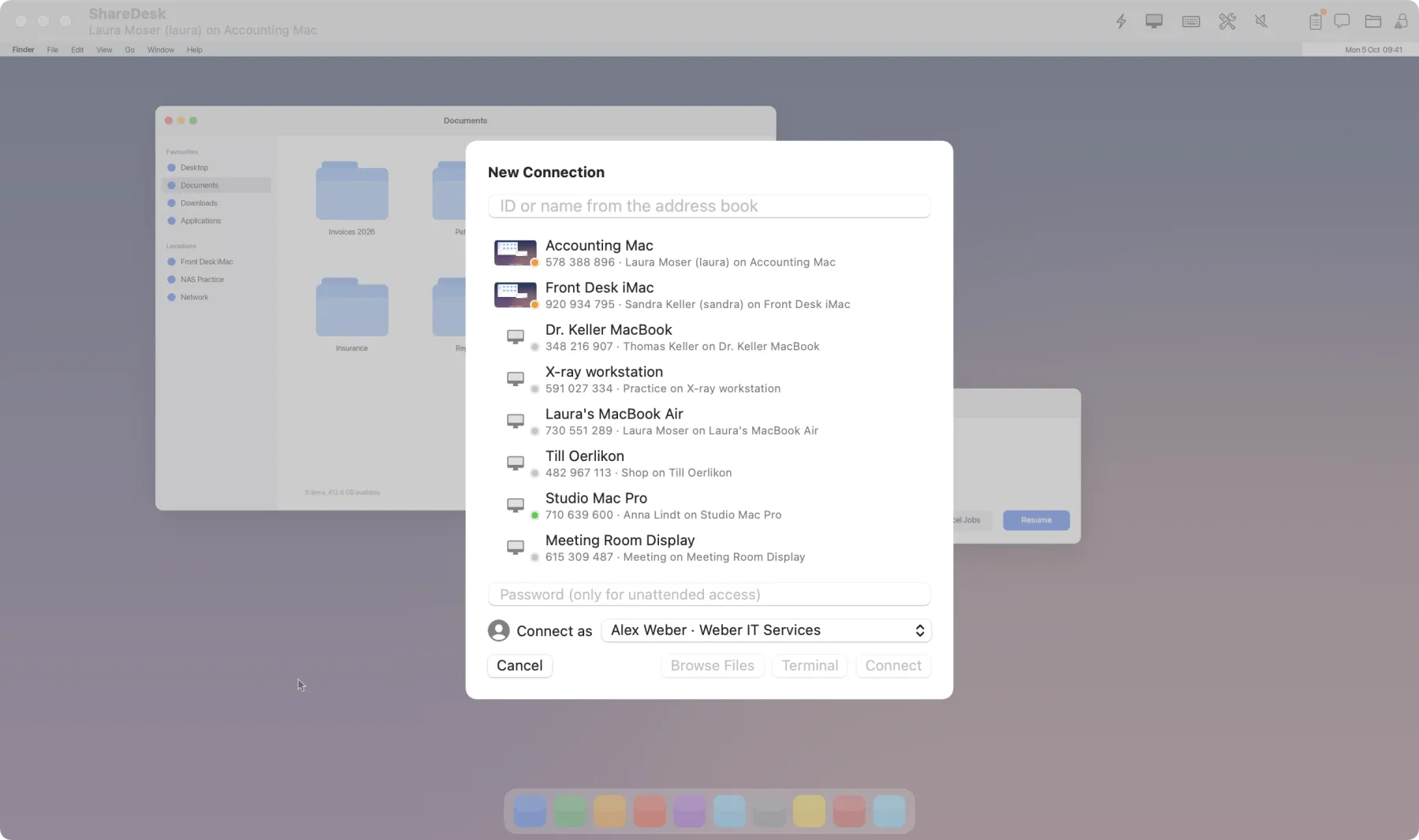
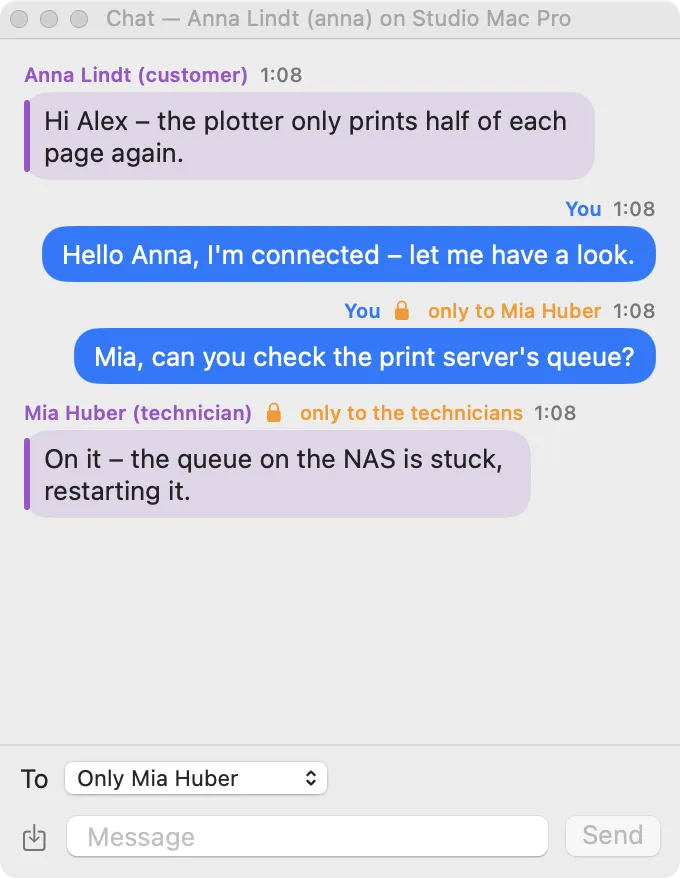
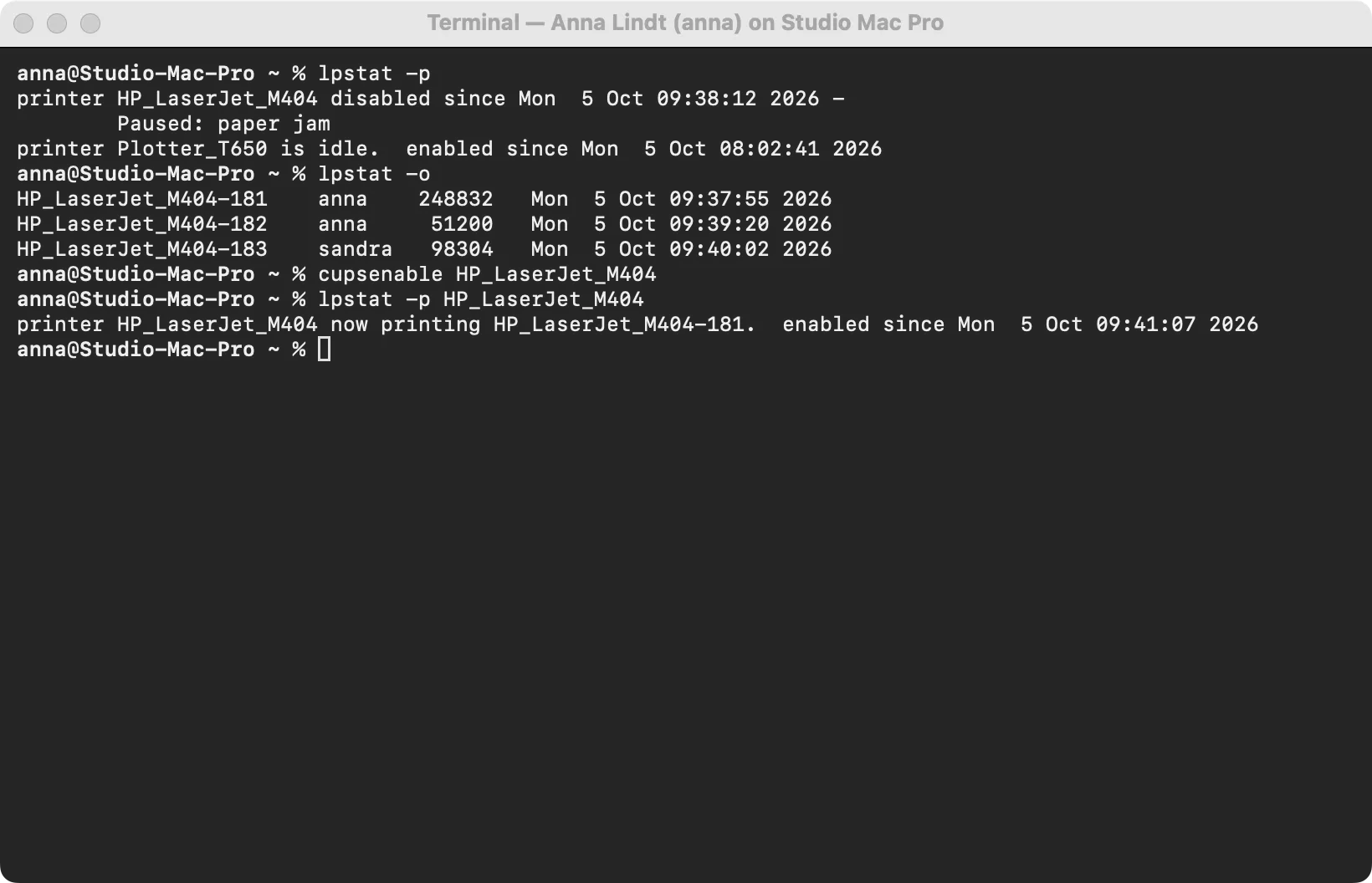
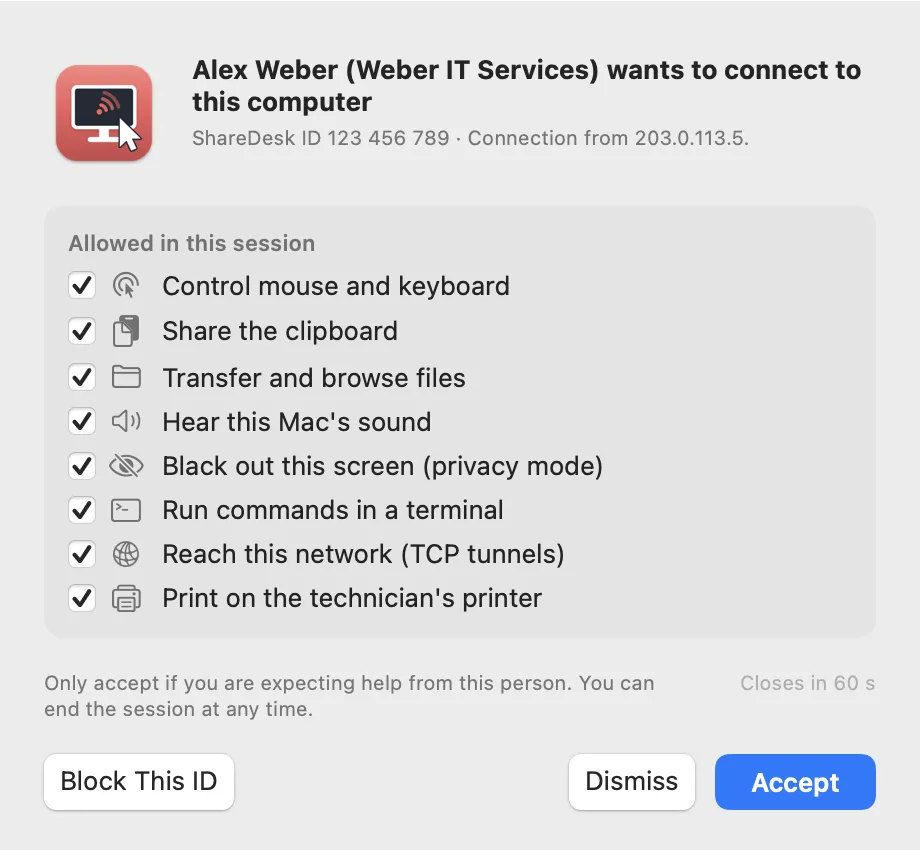
Try it. Move your mouse over the screen to take control.Swipe to see the whole window, tap to click. Resume Sandra’s printer, draw on her screen from the Tools menu, chat with her and a colleague, or open another computer with +, also as a terminal-only session.This is what your customer sees. Choose what the technician may do and accept, then hide your screen or end the session from the banner at the top.

0 mspointer delay, drawn locally
6Knative resolution with HEVC
E2Eencrypted, peer to peer
946 213 669

No accounts, no port forwarding, no VPN on the customer's side. One ID, one click on Accept, and you're connected.

The app

One app for both sides.

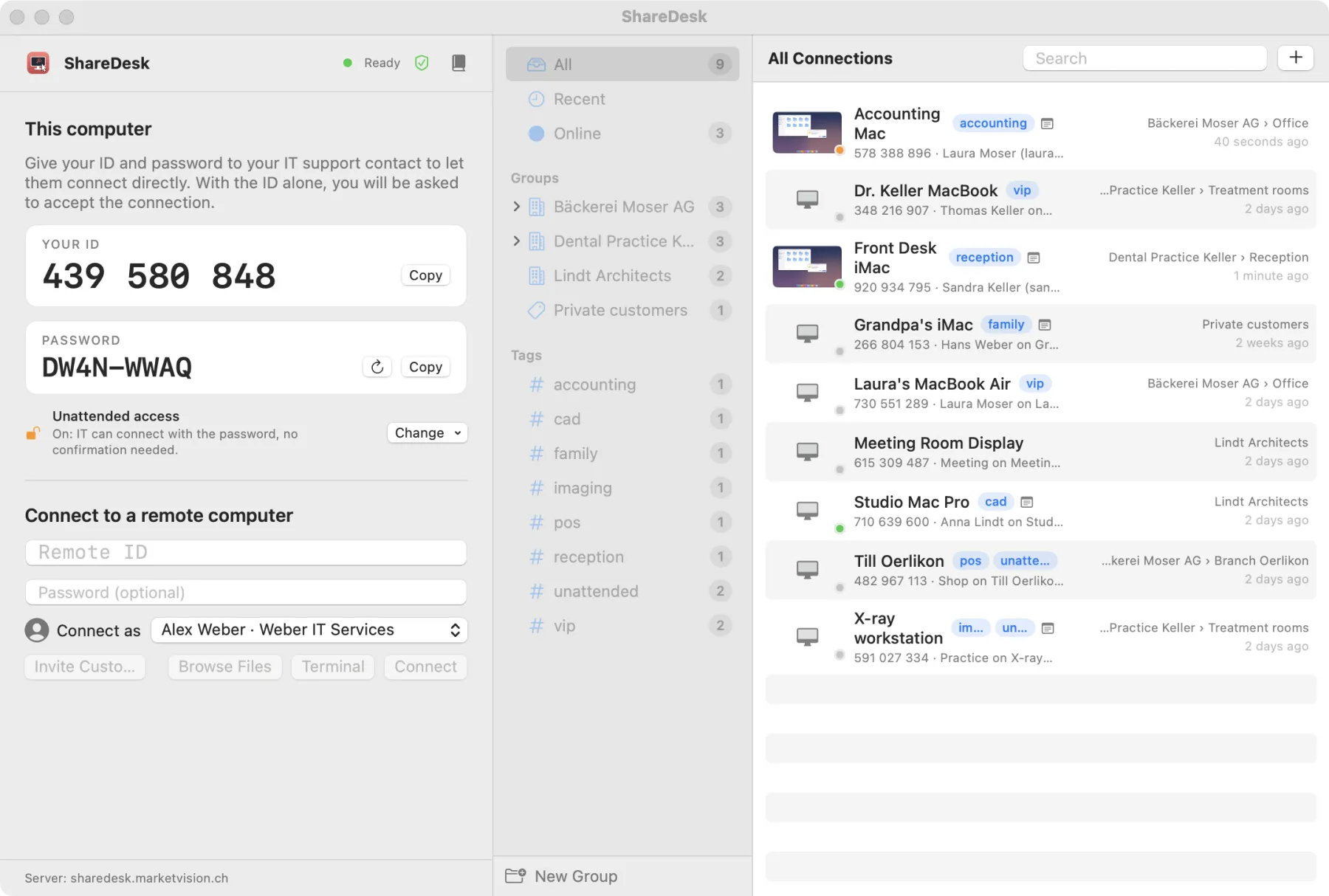
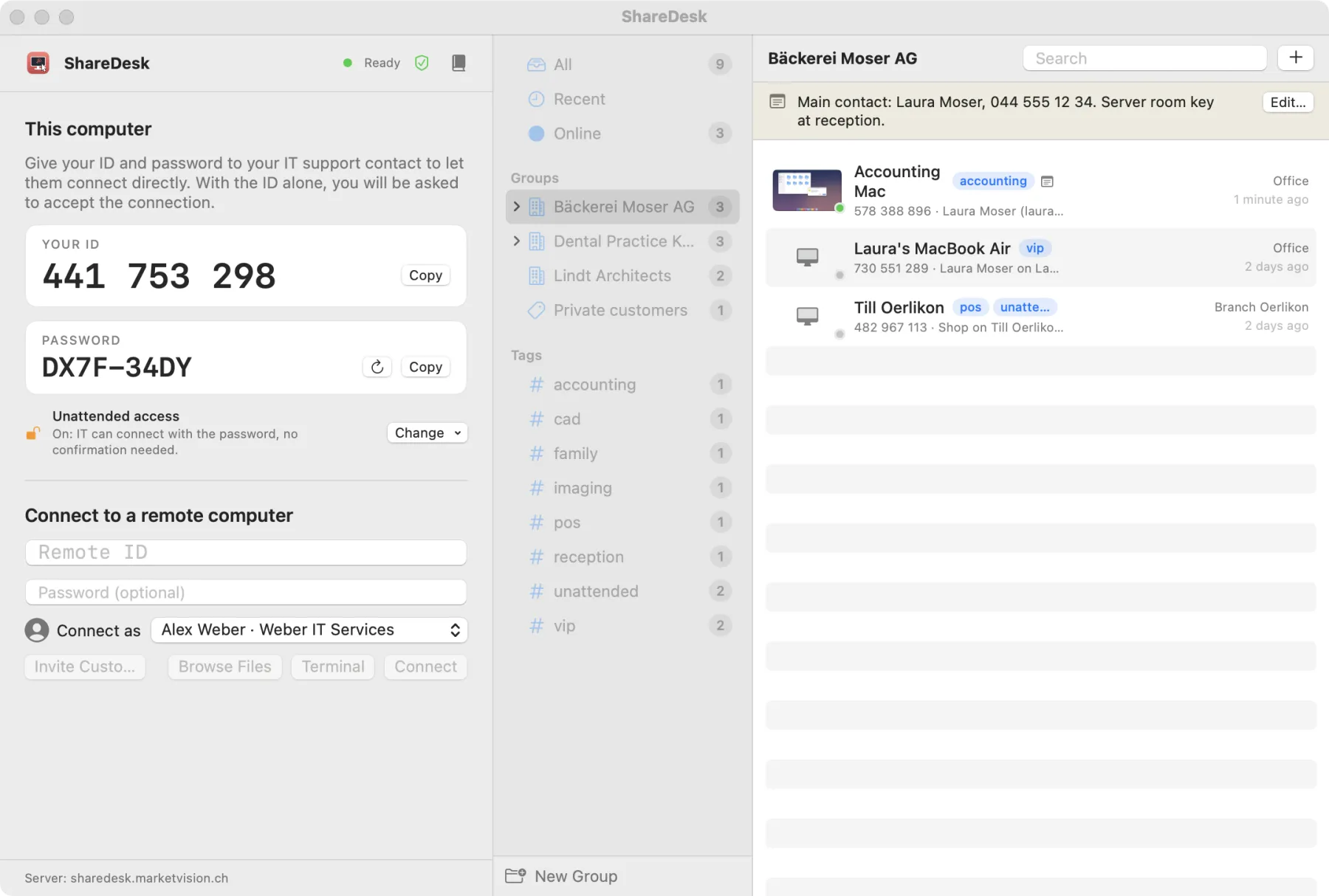
The same app for you and your customer. Real screenshots of ShareDesk on macOS, in light or dark like your system.

The ShareDesk main window: this computer's ID and password, the connect form and the address book with organisations, tags and computers online.
  • Your ID and passwordThe customer reads them out; with the password you connect without them clicking Accept.
  • Organisations, departments, categoriesEvery customer in its own group, with counts and who is online.
  • Tags and notesFind a computer by tag, see at a glance which ones have notes.
Features

Built for the everyday work of IT support.

Everything you reach for when helping someone on their Mac, fast enough that it feels local.

Latency
≈1frame

Feels like sitting in front of it

Hardware video encoding, a direct connection between the two Macs whenever possible, and no buffering: you always see the newest frame. The pointer is drawn on your side, so it never lags.

Display

5K and 6K, pixel for pixel

Native resolution with HEVC, several monitors, original size or fit to window. Grayscale and 256 colors for slow lines.

Files

Copy, paste, done

Copy files on your Mac and paste them on the remote one, and the other way round. Drag whole folders in and out, or send a file with one click, with speed and time remaining. It even works through a session inside a session, as deep as they go.

⌘ C⌘ V
Keyboard

Shortcuts go where you mean them

⌘Tab, ⌘Space and friends reach the remote Mac. Hold the right ⌘ key when a shortcut should stay on yours.

Talk

Chat and sound

Chat with the customer, hear the remote Mac, and talk to them over your microphone.

Team

Address book and profiles

Save computers in categories, share them with colleagues, connect with your name, company and photo.

Info

Know the machine

Who is logged in, macOS version, CPU, RAM, disks, monitors and network adapters, one click away.

TabsMenu barAuto updates
Power tools

Terminal, tunnels and more

Open a shell on the customer's Mac, reach their router or printer through an encrypted TCP tunnel, show them your own screen, or restart their Mac and reconnect automatically.

TerminalTCP tunnelsSwitch sidesRestart and reconnectWake-on-LAN
Privacy

Work in private, point in public

Black out the customer's screen while you work, block their keyboard and mouse, or draw on their screen to show where to click. Pressing Esc three times gives them control back.

Privacy modeBlock inputPenView only
Records

Record and document

Record a session as a video, take screenshots and keep a log of every session with transferred files and notes.

Unattended

Before anyone logs in

Unattended access also works at the login window after a restart, protected by a password and optional two-factor codes.

Macros

Your own shortcuts

Save key combinations and text such as commands or user names, and send them from the Keys menu.
See all features

How it works

Three steps. No setup.

The customer needs nothing but the app. You can even help from any browser.

1

Open ShareDesk

The customer downloads the app and opens it. It shows their 9-digit ID.

2

Enter the ID

You type it into ShareDesk on your Mac, or into the web viewer, and click Connect.

3

Accept and help

They see your name, company and photo and click Accept. You're in, with the screen, mouse and keyboard.

Who it's for

From IT service providers to family support.

ShareDesk grows with you: start with one ID, end up with a team, an address book of all your customers and the hours to bill.

IT service providers

Organise customers into organisations and departments, share them with your team, and see the time and revenue of every session per customer.

  • Address book by customer
  • Hourly rates and billing steps
  • Invitation links for new customers

In-house IT

Reach every Mac and PC in the company, also unattended and at the login window, wake sleeping machines and keep an inventory of their hardware.

  • Unattended access with two-factor codes
  • Wake-on-LAN and restart
  • Computer info and health notices

Family and friends

Help your parents with their Mac without a long phone call: they read out nine digits, you do the rest. Free for private use.

  • No account for them
  • Point with the pen, chat and talk
  • Works from any browser
Security

The customer stays in control.

Nobody gets in without a yes, everything is encrypted, and the customer can end the session at any moment.

01 · CONSENT

Every connection is accepted

The customer sees your name, company and photo and decides. Only an unattended-access password or a technician they chose to trust skips this step.

02 · VISIBLE

Always shown on screen

A banner shows who is connected, with an End button. One click ends the session.

03 · ENCRYPTED

End to end

Screen, input, files and chat travel encrypted between the two Macs. The server only helps them find each other.

04 · UNATTENDED

Passwords that never travel

For unattended access the password is proven with a one-time code; it is never sent, wrong guesses are locked out, and two-factor codes can be required.

How ShareDesk protects every session

Pricing

Free at home. Fair at work.

Your customers never pay: they only need the free app. You pay per technician, only when you use ShareDesk for work.

Private

Free

For helping family and friends and for your own computers.

  • Screen, control, files, chat and sound
  • Unattended access with two-factor codes
  • Mac, Windows and web viewer
  • Address book and session log
  • Terminal, tunnels and private network limited
Download for free
Compared

ShareDesk, TeamViewer or AnyDesk?

All three connect you to a remote computer, end-to-end encrypted. Here is where they differ, with the vendors' own figures.

FeatureShareDeskTeamViewerAnyDesk
Free for private useYesYes1Yes1
Commercial use, one technicianUSD 18 per month, billed yearlyfrom about USD 22.86 per month, billed yearly2from about USD 32.44 per month, billed yearly2
Company based inSwitzerlandGermanyGermany
ServersSwitzerlandGermany or Austria3Not stated publicly
Customer needs an accountNoNoNo
Oldest supported macOS10.151311
  1. Free use is limited to personal use; both detect commercial use automatically and can restrict sessions (TeamViewer, AnyDesk).
  2. Entry plans TeamViewer Remote Access and AnyDesk Solo, listed at CHF 18.90 and EUR 28.90 for visitors from Switzerland and converted at the ECB reference rate of 2 October 2026; all prices excluding VAT (TeamViewer, AnyDesk). Plans differ in devices and features.
  3. Data centers according to TeamViewer's security statement; connections may be routed worldwide.

Status: October 2026. TeamViewer and AnyDesk are trademarks of their owners. Missing a point? See all ShareDesk features.

FAQ

Good questions.

What people ask before their first session.

Is ShareDesk free?

Yes, for private use: helping family and friends and your own computers. For commercial use it costs USD 18 per technician and month. Your customers never need a licence.

How is ShareDesk different from TeamViewer or AnyDesk?

ShareDesk is made and hosted in Switzerland, free for private use and USD 18 per technician and month for business. It's built around helping customers: an address book per customer, hourly rates and revenue, and invitation links. See the comparison.

Does ShareDesk work with Windows?

Yes. There's an app for Windows 10 and 11 on Intel, AMD and ARM with the same features as on the Mac, from file transfer, printing and the private network to the team address book and billing. You can help Macs and PCs from either one, or from the web viewer in a browser.

Does the customer need an account?

No. They open the app and read you their ID. Accounts are only for technicians who want a shared address book and team profiles.

Can someone connect without permission?

No. Every connection must be accepted on the remote Mac, unless its owner has set up a password for unattended access or has trusted a technician through an invitation link. An allow list can limit who may connect at all.

Which Macs are supported?

Every Mac with Apple silicon or an Intel processor running macOS 10.15 Catalina or later. The download picks the right build for your Mac by itself: Macs with macOS 10.15 to 12.2 get their own build with the same two sides, give help and receive help, and its own updates. The web viewer runs in a current desktop browser.

What goes through your server?

Only the connection setup. The screen, input, files and chat go directly between the two computers, end-to-end encrypted.

Which permissions does the app need?

Screen Recording to share the screen and Accessibility for remote control. Full Disk Access is recommended for file transfer. macOS asks once.

How do updates work?

ShareDesk checks for updates by itself, shows what's new and installs them with one click.

ShareDesk app icon

Ready when you are.

Download ShareDesk for your Mac or PC and your customer's. It updates itself from then on.

macOS 10.15 or later · Apple silicon and Intel
Windows 10 and 11 · Intel and AMD · ARM version